Thinking about adding more living space or creating rental income on your Seattle property? You are not alone. Many homeowners are weighing an ADU inside the main home against a detached DADU in the backyard. In this guide, you will learn how the two options compare on rules, design, costs, rentals, and financing so you can move forward with clarity. Let’s dive in.
ADU vs DADU in Seattle
An ADU (Accessory Dwelling Unit) is a second, smaller dwelling on the same lot as your main home. It can be internal, like a basement or attic conversion, or attached as a new addition. An ADU is often the lower-cost path since you can reuse walls, roof structure, and utilities.
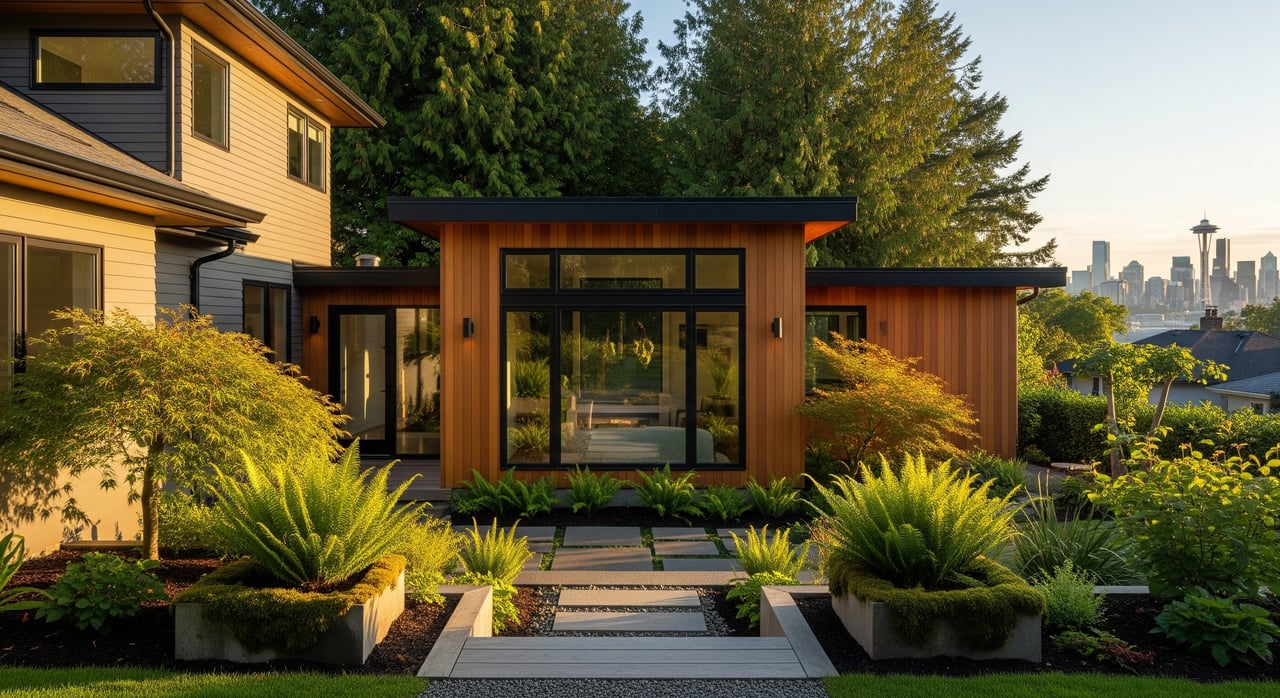
A DADU (Detached ADU), often called a backyard cottage, is a stand-alone small home on the same lot. A DADU offers more privacy and separation, which can be ideal for tenants or multi-generational living. It usually costs more to build because you are creating a new structure with its own foundation and systems.
State law has pushed cities to support ADUs and DADUs and to remove some local barriers. Seattle updated its code to align with that framework, and the Seattle Department of Construction and Inspections (SDCI) provides detailed guidance. For exact numeric limits, setbacks, and any updates to owner-occupancy rules, review current SDCI resources and the Seattle Municipal Code.
Eligibility and zoning basics
ADUs and DADUs are generally allowed on many single-family lots in Seattle. Some multifamily zones may also allow accessory units. Always confirm your zoning and site conditions with SDCI before you start design work.
Detached units must meet height, setback, and lot coverage standards that vary by zone. Smaller lots or properties with steep slopes, critical areas, or easements may face extra limits or added mitigation requirements. Your designer can map constraints early so you avoid costly redesigns later.
State law has limited local owner-occupancy mandates since 2019, and Seattle has updated local code in response. If you plan to rent the unit, be sure to check Seattle’s rental registration requirements and any short-term rental rules. If your plan converts an existing garage, confirm how that affects required parking for the main home.
Size, design, and parking
Most built units in Seattle tend to fall in the 300 to 1,000 square foot range. Backyard cottages often cluster around 400 to 800 square feet. Actual maximum size depends on whether the unit is internal, attached, or detached and how height and lot coverage apply to your lot. SDCI is the source for exact numbers.
Detached units are typically kept lower in height and smaller in mass than the main house. Design rules aim for a house-like form that fits neighborhood context. Entry placement and window orientation may be regulated, so plan for a compliant, discreet entry that supports privacy for both households.
Seattle has reduced some off-street parking requirements for ADUs, especially near transit, though specifics vary by zone and site. You may still need to maintain parking for the principal dwelling. If you are converting a garage, plan for replacement parking if required or discuss alternatives with SDCI.
Permits, timelines, and process
The typical path includes: pre-application guidance with SDCI, a complete plan set with site and utility details, building permit intake and review, construction with inspections, and final occupancy approval. Environmental or critical area review can add steps and time.
Timelines vary. An internal ADU conversion can be faster than a new detached build. Expect permit reviews to take weeks to months depending on scope, corrections, and seasonal volume at SDCI. Check SDCI’s current processing times to set realistic expectations.
Plan sets should show setbacks, structure, foundation, utilities, mechanical systems, and stormwater approach. Early coordination with Seattle Public Utilities and Seattle City Light helps you understand service capacity, meter options, and fee impacts.
Costs and key drivers
Internal or attached ADUs are often less expensive than detached builds. You can reuse the building shell and shorten utility runs. Detached units require a new foundation, exterior walls, roof, and separate systems, which increases cost.
Budget drivers include site grading, foundation type, distance to utilities, stormwater and seismic needs, level of finishes, and whether you are converting an existing garage. Because costs vary widely in Seattle, get at least two local contractor estimates and review comparable SDCI permit valuations for a reality check.
City permit and plan review fees, plus utility connection or capacity charges, can be significant. Fee totals may change based on whether you install separate meters or share service with the main house. Confirm fee schedules with SDCI, Seattle Public Utilities, and Seattle City Light.
Financing your ADU or DADU
Many owners use home equity loans or HELOCs, cash-out refinances, construction loans, or portfolio products from local lenders. Some buyers pair renovation-friendly mortgages with a purchase or refinance. Lenders and appraisers may treat ADUs differently, so keep permits and documentation organized.
If you intend to count future rent, ask your lender how they underwrite ADU income and what lease or appraisal support they need. A budget with a line for soft costs, fees, and contingency will help you avoid mid-project financing gaps.
Renting or multigenerational living
Long-term rentals are common. You must follow state landlord-tenant law and Seattle’s rental registration and inspection rules. Short-term rentals have specific registration and operating rules, including occupancy and safety standards. Review the city’s short-term rental requirements before you plan for vacation-rental income.
If your goal is multigenerational living, design for privacy and accessibility. A ground-floor bedroom and full bath, wider doors, and step-free entries can help older adults or anyone with mobility needs. These features add cost but can extend the useful life and flexibility of the unit.
Property value, taxes, and insurance
A legally permitted ADU that produces documented income often contributes positively to resale value. Appraisers look at local comparables and may consider income capitalization for valuation. Keep rental records and permits on file to support value.
Adding an ADU can increase your assessed value. The King County Assessor treats an ADU as an improvement, which can affect your property tax bill. Talk to your insurance agent as well, since a rental unit may require a landlord endorsement or a separate policy.
How to choose: ADU or DADU?
Choose an ADU if you want:
- Lower cost by reusing existing structure and systems.
- Faster permitting and build timelines in many cases.
- Easy shared utilities and a simpler footprint.
Choose a DADU if you want:
- Maximum privacy and separation for tenants or family.
- A rental that feels like a stand-alone small home.
- Flexible use that may command higher rent in some markets.
In both cases, confirm zoning, size limits, and parking rules first. Then test your budget with preliminary drawings and two or more contractor bids. Your final choice should match your site, timeline, financing, and long-term plan for use.
Seattle ADU project checklist
- Confirm zoning, lot coverage, setbacks, and any critical areas with SDCI.
- Schedule a pre-application conversation with SDCI to flag site-specific issues.
- Contact Seattle Public Utilities and Seattle City Light for meter options, capacity, and fees.
- Hire a designer to produce schematic plans, then get at least two local contractor estimates.
- Validate financing with a lender that has ADU experience and understands income treatment.
- If you plan to rent, review Seattle’s rental registration rules and short-term rental requirements, and speak with a CPA about tax treatment.
Partner with Team Ginn
Whether you are optimizing for rental income or creating space for family, you deserve a plan that matches Seattle’s rules and your budget. With deep experience across new construction and Eastside neighborhoods, our team helps you balance design, marketability, and resale value from the start. If you want a clear path from concept to closed permits and long-term value, connect with Team Ginn to schedule a consultation.
FAQs
What is the difference between an ADU and a DADU in Seattle?
- An ADU is within or attached to the main home, while a DADU is a detached backyard cottage on the same lot, which often offers more privacy but costs more to build.
Are ADUs and DADUs allowed on most Seattle single-family lots?
- Many single-family lots can host one accessory unit, subject to zoning, setbacks, and lot coverage rules, so verify eligibility and limits with SDCI for your specific site.
Do I need to provide off-street parking for an ADU?
- Seattle has reduced some ADU parking requirements, especially near transit, but you may need to maintain parking for the main home and confirm garage conversion rules with SDCI.
How long does it take to permit and build a DADU?
- Expect permit reviews to take weeks to months based on scope and corrections, with detached new builds typically taking longer than internal conversions; check current SDCI timelines.
What utilities and fees should I plan for with a new ADU?
- Budget for permit and plan review fees plus potential water, sewer, and electric connection or capacity charges, and coordinate early with Seattle Public Utilities and City Light.
Can I use an ADU for short-term rentals in Seattle?
- Some ADUs may qualify, but Seattle requires registration and compliance with short-term rental rules, including safety and occupancy standards; review the city’s STR guidance.
How will an ADU affect my property value and taxes?
- A permitted ADU with documented income can support higher value, while the King County Assessor may increase assessed value for the improvement, which can raise property taxes.