If you’re deciding between Kirkland waterfront and hillside living, you’re really choosing between two very different day-to-day experiences. One puts Lake Washington at the center of your routine, while the other often gives you more variety in home style, location, and budget. Understanding those tradeoffs can help you focus on what matters most before you start touring homes. Let’s dive in.
How Kirkland splits between waterfront and hillside
Kirkland’s neighborhood layout already reflects this divide. On the shoreline side, areas like Moss Bay, Lakeview, Houghton, and Juanita are closely tied to Lake Washington and the city’s waterfront parks. Inland and uphill areas often include places like Rose Hill, Finn Hill, Highlands, Totem Lake, Bridle Trails, Kingsgate, and Norkirk.
That matters because these micro-markets do not behave the same way. The city also maintains topography and landslide-hazard maps, which become more relevant as you move inland and uphill. In other words, this is not just a lifestyle choice. It can also affect pricing, access, parking, and future property considerations.
What waterfront living offers
Waterfront living in Kirkland is mostly about direct access to the lake and a shoreline-centered lifestyle. The city’s waterfront park system includes Marina Park, David E. Brink Park, Houghton Beach Park, Juanita Beach Park, and the 2nd Ave South Dock. These spaces shape how many buyers picture Kirkland living.
Marina Park, for example, is downtown and close to restaurants and shops. The city says it includes a sandy beach, boat launch, public art, a pavilion, summer concerts, and views of Lake Washington and Seattle. Marina Park and the 2nd Avenue South Dock also provide 82 uncovered moorage slips year-round.
Kirkland also has three guarded swimming beaches at Houghton, Waverly, and Juanita. Juanita Beach Park alone includes 1,000 feet of shoreline, two parking lots for up to 200 vehicles, and a seasonal market. If your ideal weekends involve paddleboarding, kayaking, swimming, or easy beach access, the shoreline side has a clear advantage.
Waterfront is also a specialty market
Waterfront homes are rare, and that rarity shows up in the numbers. According to Kirkland’s 2025 Waterfront Report, residential waterfront single-family homes had a 2024 median sales price of $6.3 million, with 23 closed sales and an average of 63 days on market. That represented just 2% of Kirkland’s total sales.
If you want shoreline access without a single-family estate price point, waterfront condos offer another path. NWMLS 2024 waterfront condo data shows 30 Kirkland waterfront condo sales at a median price of $1.425 million. That is still a premium segment, but it gives buyers another way into the waterfront lifestyle.
Waterfront permits can be more complex
The lifestyle appeal is strong, but waterfront ownership can come with more regulation. Kirkland’s Shoreline Master Program applies to land within 200 feet of Lake Washington’s ordinary high water mark and to certain wetlands connected to Juanita Bay and Yarrow Bay.
The city notes that shoreline setback standards vary by area. New development, alterations, docks, bulkheads, grading, and shoreline stabilization can require permits or exemption review. If you are thinking about future changes to the property, that extra layer matters.
What hillside living trades for
Hillside or east-of-freeway living in Kirkland is not one single experience. It covers a broader range of neighborhoods, price points, and convenience patterns. Some areas feel more suburban and car-oriented, while others are evolving into mixed-use centers with retail and transit access.
The city’s planning work highlights this clearly. Greater Downtown is mixed-use, high- and medium-density, and pedestrian-oriented, while Totem Lake functions as a major destination with residential, retail, office uses, and transit connectivity. The city is also building a pedestrian and bicycle path along NE 85th Street that will connect downtown to Rose Hill on the east side of I-405 via the NE 80th Street pedestrian bridge.
So, inland living is not simply less convenient. It is a different kind of convenience. Depending on the exact location, you may trade direct lake access for easier freeway access, a more conventional residential setting, or proximity to growing mixed-use hubs.
Hillside pricing has more range
One of the biggest advantages inland is variety. In March 2026, North Rose Hill had a median sale price of $1.46 million and a 22-day median market time. Finn Hill was at $1.223 million and 13 days, Central Houghton was at $2.024 million and 13 days, and Totem Lake was at $1.124 million with a 107-day median market time.
Those figures show why “hillside” should not be treated as one price bracket. Some inland pockets still command premium pricing, while others create more room for buyers who want Kirkland access without paying shoreline-level premiums.
Slope and site conditions matter more uphill
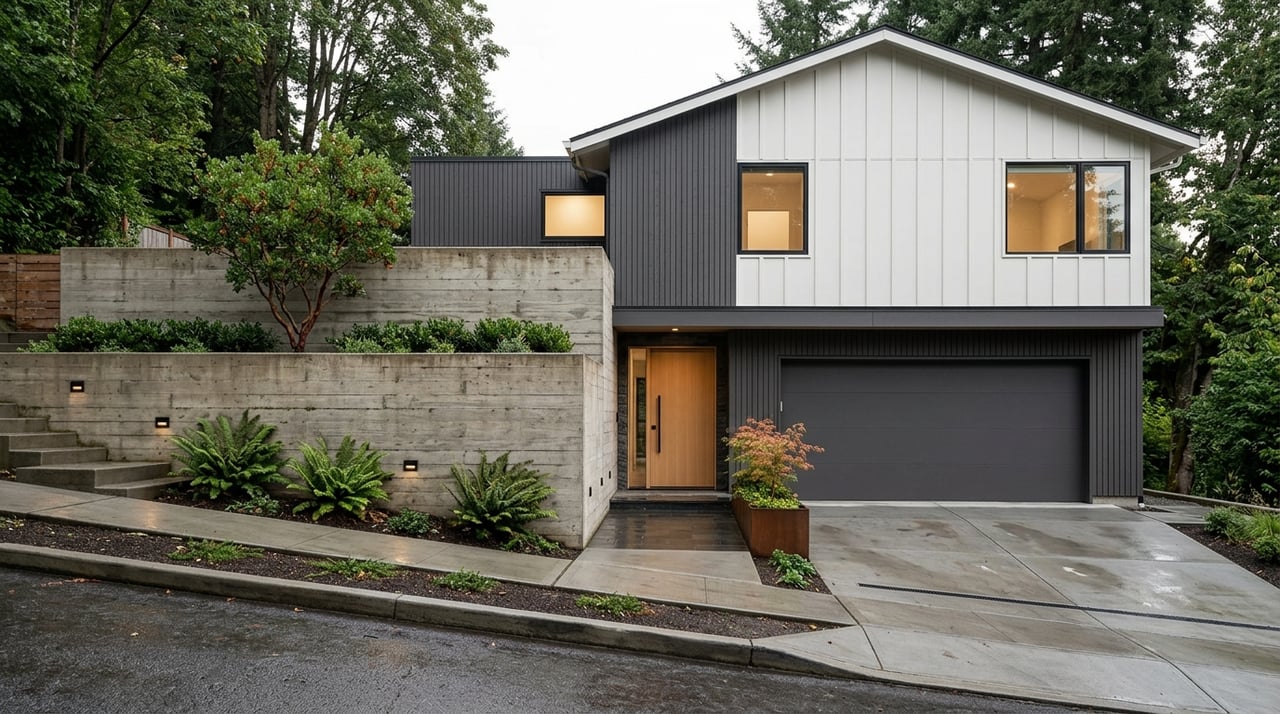
If you move uphill for a view or a different neighborhood feel, site conditions become more important. Kirkland maintains both a topography map and a landslide-hazard map, which is useful context for buyers looking at sloped lots.
That does not mean hillside living is a problem. It means you should pay closer attention to drainage, retaining walls, and driveway grades as part of your home search. For many buyers, that is a fair trade for more inventory choices and less shoreline permit complexity.
Comparing daily life in each setting
The best choice often comes down to how you want your days to feel. Waterfront living tends to center on the lake, parks, beaches, and downtown-adjacent activity. Hillside living often centers on residential streets, broader home options, and access patterns that may work better for commuting or everyday errands.
Neither option is automatically better. The right fit depends on whether you value water access, walkability, parking ease, view potential, or price flexibility most.
Walkability and access
Walkability tends to be strongest near the shoreline and downtown. The city has invested in pedestrian connections between the waterfront and downtown storefronts, and Marina Park sits next to restaurants and shops. That creates a more continuous walk-to-dining and walk-to-water experience.
Inland areas can still be walkable, but the pattern is more node-based. Kirkland maintains neighborhood walking maps for areas such as Houghton, Juanita, Lakeview, Moss Bay, Totem Lake, and Everest, which shows that walkability varies by pocket rather than following a simple waterfront-versus-hillside rule.
Parking and transportation
Parking works differently in each setting. Downtown Kirkland has a real-time parking availability map, timed public lots, a municipal garage, and paid lots around the waterfront. Boat users also have designated launch and moorage logistics.
Inland and hillside neighborhoods usually rely more on private driveways, garages, and standard residential street parking. If you want a more typical driveway-and-garage setup, that may tilt you inland. If you want to be near waterfront activity, expect parking to feel more structured and location-specific.
Competition and inventory
Waterfront inventory is rare and highly specific to each property. That makes pricing and competition less about broad market averages and more about exact frontage, access, condition, and location along the lake.
Kirkland’s broader market had a median sale price of $1,375,000 in March 2026, with homes receiving two offers on average and selling in about 13 days. That is competitive, but it is still a different market from a narrow waterfront segment where supply is limited and each home can trade on unique features.
Questions to ask before you choose
If you are weighing waterfront against hillside living, a few practical questions can help clarify your next step.
- Are you paying for direct shoreline access, a water view, or simply a Kirkland location near the lake?
- Do you want to walk to restaurants, parks, and waterfront amenities more often?
- Would easier freeway or transit access fit your routine better?
- Is your budget better aligned with a rare waterfront property or with the wider pricing range found inland?
- If you are considering updates, does the property fall under shoreline jurisdiction or involve slope-related site considerations?
These questions tend to reveal the real priority quickly. Many buyers start by saying they want “Kirkland near the water,” but what they really want may be lake access, a view, downtown energy, or simply a strong location with a more flexible budget.
The bottom line for Kirkland buyers
In Kirkland, waterfront buyers are usually paying for the shoreline experience itself, plus rarity and direct lake access. Hillside and east-of-freeway buyers are more often trading that immediate water connection for a wider range of home types, more budget flexibility, and access patterns that may better match everyday life.
The key is to compare neighborhoods based on how you actually want to live, not just how a listing looks online. When you understand the tradeoffs clearly, it becomes much easier to narrow your search and move with confidence.
If you want help comparing Kirkland micro-markets, evaluating property-specific tradeoffs, or finding the right fit for your goals, connect with Team Ginn.
FAQs
What is the main difference between Kirkland waterfront and hillside living?
- Waterfront living usually offers direct Lake Washington access, beach and boating amenities, and a shoreline-focused lifestyle, while hillside living usually offers more variety in home types, pricing, and access to inland retail, freeway routes, or transit.
How expensive are waterfront homes in Kirkland compared with inland areas?
- Kirkland waterfront single-family homes had a 2024 median sales price of $6.3 million, while inland neighborhoods in the research ranged from $1.124 million in Totem Lake to $2.024 million in Central Houghton, showing a much wider pricing spread inland.
Do Kirkland waterfront homes have special permit rules?
- Yes. Kirkland’s Shoreline Master Program applies to land within 200 feet of Lake Washington’s ordinary high water mark, and certain work such as docks, grading, bulkheads, shoreline stabilization, and some alterations may require permits or exemption review.
Are hillside neighborhoods in Kirkland less walkable than waterfront areas?
- Not always. Waterfront and downtown areas often offer a more continuous walking experience near parks, shops, and restaurants, but some inland areas, including Totem Lake, also have walkable mixed-use nodes and neighborhood walking routes.
What should you check when buying a hillside home in Kirkland?
- You should pay close attention to slope-related factors such as topography, drainage, retaining walls, driveway grades, and whether the property appears in areas shown on the city’s landslide-hazard mapping.