Got a sloped lot in Sammamish and wondering how to make it a win? You are not alone. Many Sammamish homes sit on hillsides, which makes a bright, walkout lower level a smart way to gain space and value. In this guide, you will learn how to plan a daylight basement that looks great, passes inspections, manages water, and appeals to Eastside buyers. Let’s dive in.
Why daylight basements win in Sammamish
Sammamish has plenty of sloped parcels near lakes and stream basins. That topography creates natural opportunities to open a lower level to the outdoors. You get flexible space for guests, an office, a media room, or potential ADU use where allowed.
Expectations are high in this market. Bright finishes, good ceiling height, and excellent moisture control are what buyers look for. Done right, a daylight basement adds livable square footage that actually gets used.
First steps: site, slope, and permits
Before you sketch a plan, confirm if your lot is near steep slopes, landslide hazards, streams, or wetlands. Sammamish regulates these as critical areas, and work near them can trigger buffers and reports. Review the City guidance on geologically hazardous areas and buffers to understand likely requirements and timing. City critical areas overview
Changes to a basement that add bedrooms, exterior doors, or egress windows typically require a building permit and inspections. Start with the City’s Permit Center to confirm submittals, sequencing, and inspection steps. City permit and inspection info
If your design adds impervious area or redirects runoff, Sammamish stormwater rules and Low Impact Development practices will apply. Some lots have stricter limits. Review the municipal code to avoid surprises. Stormwater limits and LID
Get drainage and waterproofing right
Western Washington winters are wet, and below‑grade spaces need robust water management. Plan positive drainage at window wells and light wells, perimeter drains, and sump pump if needed. Keep roof and surface runoff routed away from exposed foundation walls and wells.
Sammamish prioritizes preventing downslope impacts, so design your grading and infiltration accordingly. This is one area where cutting corners leads to moisture, odor, or even damage. Sammamish stormwater guidance
Egress windows that pass inspection
If you add a bedroom, egress is required. Size openings using the International Residential Code rules most inspectors reference. Plan for:
- Net clear opening area 5.7 sq ft minimum, or 5.0 sq ft at grade-floor openings.
- Minimum clear opening height 24 in and width 20 in.
- Maximum sill height 44 in above the floor.
- Window wells at least 9 sq ft in area with a 36 in minimum dimension.
Confirm swing and operation without tools, and include well ladders where needed. Design the well to drain to daylight or an approved system. Egress window code summary
Light, layout, and livability
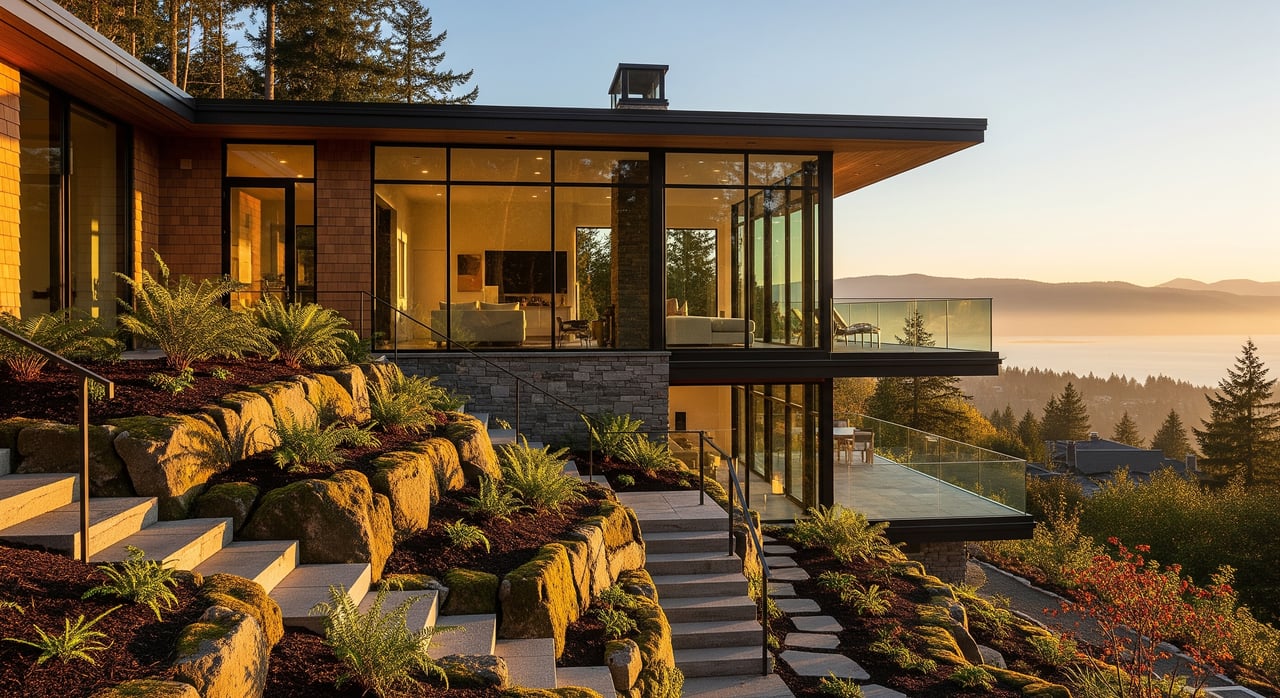
Use the slope to your advantage. Larger openings on the downhill side, a sunken patio, or a short walkout run can flood the space with daylight. Inside, light‑colored finishes, glass doors, and open sightlines help rooms feel taller and brighter.
If your lot allows, consider a flexible layout that can function as guest space or a future ADU. Always verify local requirements before planning any separate living space.
Energy, HVAC, and indoor air quality
Washington’s energy code sets insulation minimums for below‑grade walls. Common approaches include R‑10 continuous insulation or equivalent assemblies. Plan for thermal breaks, sealed rim joists, and ventilation so you avoid condensation behind finishes. WSEC below‑grade wall requirements
Extend your home’s heating and cooling if capacity allows, or add a dedicated zone, such as a mini split. Include dehumidification strategies if the space tends to run cool. Test for radon before you finish walls and floors so any mitigation can be integrated cleanly. EPA radon guidance
Retaining walls and excavation basics
Creating a walkout on a slope often means cuts, hauling soil, and building retaining walls. Walls over typical DIY heights usually require engineering, drainage, and permits. If your work touches mapped steep slopes or requires significant cut and fill, a geotechnical report is commonly required. Critical areas and geotech triggers
Plan access for equipment, especially on hillside streets, and budget extra time for erosion controls and winter restrictions. If you are uncertain whether a separate grading or retaining wall permit is needed, check early. King County permit thresholds overview
Cost drivers and a realistic timeline
Budgets vary with scope, but the big cost drivers are excavation and hauling, retaining walls, structural modifications, egress window cutting and wells, drains and sump, insulation to meet code, HVAC adjustments, and finish quality. Geotechnical studies and peer reviews add cost but also reduce risk.
Small egress window projects often take a few weeks to a couple of months, including permits and inspections. Full daylight or walkout conversions typically run several months when you factor in design, reports, permits, exterior earthwork, interior finish, and final inspections. Weather can extend schedules.
Resale insights for Sammamish sellers
In a high‑value Eastside market, buyers tend to reward finished lower levels that feel like the main floor. The keys are light, proper egress, durable finishes for a wet climate, and documented permits. Spaces with a separate entrance and flexible rooms can broaden appeal.
If you are evaluating value, compare with recent local sales that have similar lower levels. Focus on quality, moisture history, and permitted status.
Quick checklist for sloped-lot success
- Confirm critical areas and buffers with the City.
- Map drainage and waterproofing early.
- Size egress windows and wells to code.
- Specify below‑grade insulation that meets WSEC.
- Plan HVAC and ventilation for comfort and dryness.
- Test for radon before finishing.
- Get bids from pros familiar with Sammamish and King County requirements.
- Sequence permits to avoid weather delays.
Ready to weigh options on a sloped Sammamish lot or prep a home for market? Connect with Team Ginn for grounded guidance on design tradeoffs, value, and buyer expectations on the Eastside.
FAQs
What is a daylight basement on a sloped Sammamish lot?
- A daylight basement is a lower level with full or partial exposure to the outside on the downhill side, often with larger windows or a walkout that takes advantage of the slope.
Do I need permits to add egress windows or a walkout?
- Yes, new egress openings, exterior doors, and structural changes typically require building permits and inspections; start with the City’s Permit Center for steps and timing. Permit and inspections
When does Sammamish require a geotechnical report?
- If work touches mapped steep slopes or landslide hazard buffers, involves significant cut and fill, or shows seepage or springs, a geotechnical report is commonly required. Critical areas triggers
What are the minimum egress window sizes for bedrooms?
- Plan for a net clear opening of 5.7 sq ft minimum, or 5.0 sq ft at grade-floor, with minimum 24 in height, 20 in width, and a sill no higher than 44 in; wells need at least 9 sq ft with a 36 in minimum dimension. Egress rules
How do Sammamish stormwater rules affect my design?
- Projects that add impervious area or alter runoff must use approved drainage and Low Impact Development methods and may have stricter limits in sensitive basins. Stormwater and LID
Should I test for radon before finishing a basement?
- Yes, test before you close up walls; if mitigation is needed, it is simpler and more cost‑effective to install during construction. EPA radon guidance